Studio
Inquiries
People & Culture

Studio
Inquiries
People & Culture
Ⓒ2026 Ars Thanea (SYZYGY Group). All Rights Reserved.
Join our newsletter
What’s new, what’s next — straight to your inbox.
What’s new, what’s next — straight to your inbox.
Studio
Inquiries
People & Culture
Studio
Inquiries
People & Culture
Ⓒ2026 Ars Thanea (SYZYGY Group). All Rights Reserved.
author :
Peter Jaworowski
tags :
[ Inside Ars Thanea ]
[ Pipeline ]
[ Industry ]
The Drawer is not a metaphor for inspiration. It is an accumulated memory. It is built slowly through briefs, mistakes, iterations, and investment that often has no immediate return. Only after years of doing this consistently does experimentation stop feeling like risk and start functioning as infrastructure.
When R&D is documented, shared, and treated as collective property rather than individual discovery, it shifts from a temporary production phase to something structural. And that shift changes how a studio operates, how clients experience collaboration, and how artists grow inside the system.
A growing Drawer changes how we approach briefs. We rarely start from a blank page anymore, but that does not mean we recycle ideas. We start from reference points that we built ourselves. Something tangible. Something we tested. Something that allows us to move faster without moving blindly.
At the same time, every project needs to expand the Drawer. If we only reuse what we know, the work slowly becomes predictable. If we only chase novelty, we lose efficiency and control. The real strength comes from mixing accumulated knowledge with deliberate expansion.
Over time, this balance turns experimentation into operational leverage. Previous tests accelerate new work. Each new project is a chance to stretch the system rather than just use it. What started as scattered experiments slowly turns into a collective capability.
The Drawer does not belong to one artist or one team. People move on. Projects end. Trends shift. The knowledge stays. And that continuity builds stability in a field that is otherwise volatile.
Infrastructure can create comfort. Comfort can reduce ambition. If the Drawer becomes a safe zone, evolution slows down.
There is also a financial reality behind all of this. Long-term R&D requires investment long before a measurable return appears. Many studios underestimate that exposure. We did too. It hurt before it helped.
Infrastructure does not eliminate risk. Every new brief still demands original thinking. The system should support bold ideas, not replace them.
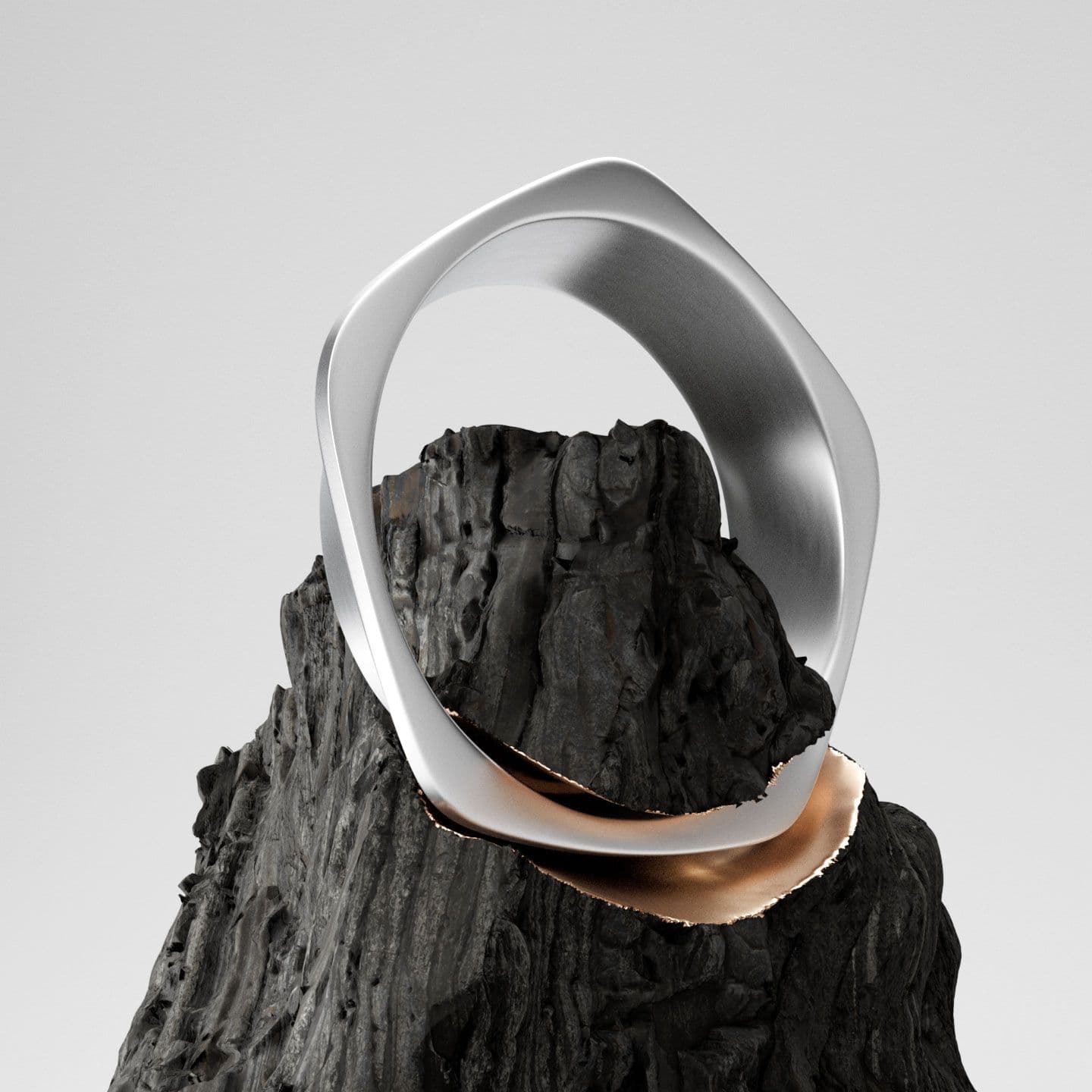
For clients, the Drawer means we do not explore blindly. Exploration does not start from zero. We can move faster without defaulting to generic solutions because we already understand what has been tested, what scales, and what breaks.
It also reduces hidden stress. When systems have been internally tested, the likelihood of late-stage surprises drops significantly. That creates a healthier relationship between ambition, budget, and timeline.
There is another important aspect. Motion design is abstract. Abstract thinking is difficult to align with when it only exists in language. Showing something that has already been explored makes conversations clearer and decisions more grounded.
Clients sometimes assume R&D means endless iteration. It does not. Structured exploration only works when it has boundaries. Those boundaries are not there to limit ambition. They exist to protect outcomes.
For artists, the Drawer is education. Access to real setups and experiments dramatically shortens the learning curve. Knowledge becomes visible instead of tribal.
Exploration builds agility. In the early stages of R&D, speed matters more than polish. That can feel uncomfortable at first. Some artists struggle with ambiguity. Over time, they realize that early exploration is about momentum, not perfection.
The strongest R&D results rarely come from cautious adjustments. They come when someone is willing to push an idea too far before pulling it back. Deliberately overshooting often reveals more than careful tweaking ever could. Technical skill matters, but creative courage matters just as much.
Some discoveries simply cannot be engineered directly. Without structured experimentation and the willingness to go beyond what feels safe, certain outcomes would never appear.
Not everyone enjoys ambiguity. Without guidance and clear direction, R&D quickly turns into frustration instead of growth.
There is also tension between exploration and execution. Artists must know when to stop searching and start finishing. Infrastructure supports that decision, but it cannot make it for them.
The Drawer did not transform us overnight. What changed was how seriously we treated it. We stopped seeing R&D as isolated experiments and started treating it as a long-term capability. We documented it. We shared it. We built processes around it. That was the moment experimentation stopped being an occasional phase and became part of how we operate.
R&D still carries risk. It always will. The difference now is that the risk is chosen, not accidental. We no longer approach each brief as a reset. We approach it with memory.
And in creative production, memory compounds faster than effort.
Author
Peter is a founding partner and Chief Creative Officer, shaping the studio’s creative vision since 2007. He pushes ideas and craft to their highest form, setting the bar for creative excellence across the studio.
Connect:
LinkedIn