Studio
Inquiries
People & Culture

Studio
Inquiries
People & Culture
Ⓒ2026 Ars Thanea (SYZYGY Group). All Rights Reserved.
Join our newsletter
What’s new, what’s next — straight to your inbox.
What’s new, what’s next — straight to your inbox.
Studio
Inquiries
People & Culture
Studio
Inquiries
People & Culture
Ⓒ2026 Ars Thanea (SYZYGY Group). All Rights Reserved.
author :
Peter Jaworowski
tags :
[ Industry ]
When selecting a production partner, most conversations revolve around capabilities, reels, budgets, and timelines. Far less attention is given to something more fundamental: the role and the value that the partner will assume within the broader creative ecosystem, and how that position influences the entire collaboration.
That question has become more relevant as the production landscape has grown increasingly layered and distributed.

In-house creative teams have expanded. Agencies operate with different structures and expectations than they did a decade ago. Independent studios have specialized more sharply. At the same time, AI tools have accelerated execution and lowered certain technical barriers to entry.
The result is not a flatter system, but a more layered and interdependent one. In a layered ecosystem, clarity of role matters more than the breadth of capabilities.
When roles are blurred, accountability becomes diffuse. Expectations drift between teams. Scope expands without clear ownership. Creative authority becomes harder to define. Many production problems that teams attribute to budget or timing are structural. They begin with unclear ownership and undefined expectations.
Capabilities answer the question of what a partner can technically produce. Role answers a different question: where that partner creates the most leverage within the project's structure. Without that distinction, production often compensates for structural ambiguity instead of amplifying creative intent.

A studio may have extensive capabilities and still operate in a position that weakens collaboration if its contribution is not clearly defined in relation to strategy, concept ownership, or distribution. Over the years, we expanded our own capabilities and collaborated across different layers of the production chain. For a while, we also tried to position ourselves too broadly. We said yes to roles that were adjacent to our core strength and occasionally diluted the clarity of our contribution.
That experience was necessary. It showed us that growth without definition creates friction, not leverage. The turning point did not come from adding more services. It came from clarifying the role we are best positioned to play.
We do not define ourselves primarily by output volume or by the range of technical tools at our disposal. We operate as an extension of creative teams, translating vision into visual systems that can sustain precision, scale, and long-term relevance. That position requires close alignment with strategy, but it does not replace it. It demands high-level craft, but it is not an execution factory detached from context. It is a focused layer within a broader ecosystem. From experience, we have learned that this role functions best when it is engaged early enough to understand the context behind an idea. When a production partner enters only at the execution stage, key decisions have already been fixed, constraints are rigid, and creative intent must be interpreted rather than shaped. In contrast, when context is shared earlier, the partner can better assess feasibility, suggest structural refinements, and protect the integrity of the idea before it becomes expensive to adjust.
Early involvement does not mean expanding control. It means expanding understanding. The deeper the understanding of the strategic intention, the more precise and helpful the production contribution can become. This is what we mean when we describe ourselves as an extension of visionary creative leaders: not an external supplier, but a focused execution layer that strengthens and protects the idea's ambition. This distinction may appear subtle on paper. In practice, it shapes the entire collaboration.

Partners who understand their role collaborate differently. When role clarity is established early, decision-making accelerates. Responsibility becomes easier to assign. Creative ownership is respected rather than competed over. Ambition can increase when boundaries are understood rather than repeatedly negotiated. In today’s environment, trying to be everything is often rewarded in the short term and punished in the long term.
As tools become more accessible and production becomes more decentralized, external partners are evaluated not only on what they can deliver, but on why they are involved in the first place. In that environment, positional precision becomes a strategic advantage. Clarity of role is not branding language. It is an operational discipline. Without it, production partners become interchangeable. With it, they become strategically relevant.
Before selecting a production partner, it may be worth asking not only what they can produce, but what role they are prepared to assume within your ecosystem, and how that role supports the value you are trying to build. In a fragmented landscape, long-term relevance is shaped less by the volume of services offered and more by the clarity of contribution.

01
Capabilities show what a production partner can technically deliver. The role defines where that partner creates the most leverage within the project. Without that distinction, production often ends up compensating for structural ambiguity instead of amplifying the original creative intent.
02
Many production problems attributed to budget or timing begin with blurred roles and unclear ownership. When expectations drift between teams, accountability weakens, and scope expands without clear responsibility.
03
The most valuable production partners are not execution factories, but focused layers within the creative ecosystem. Their role is to strengthen the idea, protect its ambition, and translate it into visual systems that can scale with precision.

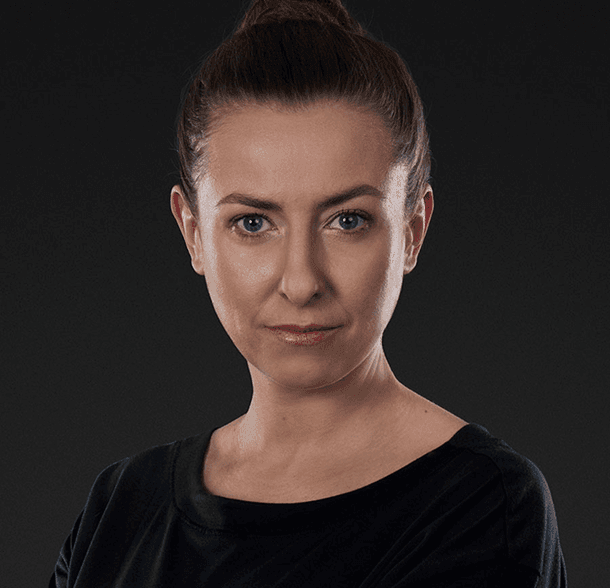
Author
Peter is a founding partner and Chief Creative Officer, shaping the studio’s creative vision since 2007. He pushes ideas and craft to their highest form, setting the bar for creative excellence across the studio.
Connect:
LinkedIn